
Polymarket review (2026): the US app, bonus and verdict
Published May 22, 2026 · Last updated: September 29, 2026

Polymarket US · Deposit $10 get a $25 Trading Bonus!
COLLEGEPMClaim (opens in a new tab)21+ · T&Cs apply
18+ Only. Restrictions and eligibility requirements apply. Not available in all jurisdictions. Trading is risky. 100% loss can occur. See polymarket.com/tos for more information. The Polymarket US App serves as an independent software provider and affiliate of Polymarket US and Polymarket Clearing, the CFTC-regulated exchange and clearing organization.

TL;DR
- Polymarket is the largest prediction market by market count and volume.
- US traders use the Polymarket US app: CFTC-regulated, funded and traded in US dollars.
- Available in 49 states plus D.C. (not Nevada); new users deposit $10 and get a $25 trading bonus with code COLLEGEPM.
Polymarket US · Deposit $10 get a $25 Trading Bonus!
COLLEGEPM
Claim on Polymarket US (opens in a new tab)
18+ Only. Restrictions and eligibility requirements apply. Not available in all jurisdictions. Trading is risky. 100% loss can occur. See polymarket.com/tos for more information. The Polymarket US App serves as an independent software provider and affiliate of Polymarket US and Polymarket Clearing, the CFTC-regulated exchange and clearing organization.
Last checked October 21, 2026
New to this? Read this first
Prediction markets price events in cents, not odds. Here is the vocabulary used on this page, in plain English.
- Price = probability
- A contract that pays $1 trading at 12¢ means the market thinks there's a 12% chance.
- YES / NO share
- YES pays $1 if it happens. NO pays $1 if it doesn't. You can never lose more than you paid.
- Implied chance
- Just the price read as a percentage. A contract at 14¢ implies a 14% chance.
- Vig
- A built-in margin some venues charge. On prediction markets you pay the spread and fees instead.
- Liquidity
- How much money is in the market. More money means you can get in and out at the price you see.
Polymarket is the prediction market that broke containment during the 2024 election, and since 2025 it has a regulated US app. Here's the real review for US traders — what's good, what's not, what to know before you fund.
Polymarket scorecard 4.4 / 5
| App quality | 4/5 | Slick app. |
|---|---|---|
| Fees | 4/5 | Fees are shown before you confirm; no crypto on-ramp costs in the US app. |
| Market selection | 5/5 | The widest catalog anywhere; thousands of contracts. |
| Welcome offer | 5/5 | Deposit $10, get a $25 trading bonus with code COLLEGEPM. |
| Legal/trust | 4/5 | CFTC-regulated exchange and clearing organization in the US. |
The headline verdict
Polymarket is the best prediction market in the world by selection — and US traders can now use it legally. The Polymarket US app runs through a CFTC-regulated exchange and clearing organization, you fund and trade in dollars, and it's available in 49 states plus D.C.
What's good
- Market selection. Polymarket lists thousands of contracts across politics, crypto, sports, culture, science, and policy. If a measurable event matters publicly, there is usually a Polymarket on it within days.
- Regulated in the US. Polymarket US and Polymarket Clearing are a CFTC-regulated exchange and clearing organization, the result of Polymarket's 2025 acquisition of QCX.
- Dollars, not crypto. The US app funds and trades in US dollars. No wallet, stablecoins or network fees to manage.
- A welcome offer for a small deposit. Deposit $10 and get a $25 trading bonus with code COLLEGEPM.
What's bad
- Not in Nevada. The US app covers 49 states plus D.C.
- Full identity verification. Like any regulated US exchange, you'll verify your identity before trading.
- Thin liquidity on niche markets. Polymarket's long tail has more markets than traders, which means wide spreads outside the most popular contracts.
Who should use Polymarket
Traders who want the widest market catalog, from college football to politics and culture. Anyone who wants the largest welcome bonus for the smallest deposit.
Who should not
Anyone in Nevada. If you want a web app too, Kalshi is the closest regulated alternative.
How to get started
See our step-by-step how to use Polymarket guide or open an account directly:
Open a Polymarket account → (opens in a new tab)
US traders: Polymarket is available via the app in 49 states + D.C. Deposit $10 and use code COLLEGEPM for a $25 bonus. See where Polymarket is available and is Polymarket legal? before signing up.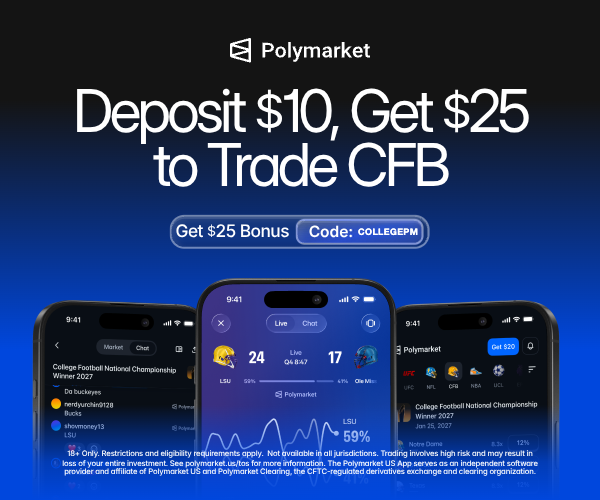 (opens in a new tab)
Sponsored · Polymarket
Deposit $10, Get a $25 Trading Bonus!
Trade real-money prediction markets on Polymarket's app. Deposit $10 and use bonus code COLLEGEPM at sign-up for a $25 trading bonus.
Available in 49 states + D.C.
Trade on Polymarket — Get $25 (opens in a new tab)21+. Gambling problem? Call 1-800-GAMBLER.
18+ Only. Restrictions and eligibility requirements apply. Not available in all jurisdictions. Trading is risky. 100% loss can occur. See polymarket.com/tos for more information. The Polymarket US App serves as an independent software provider and affiliate of Polymarket US and Polymarket Clearing, the CFTC-regulated exchange and clearing organization.
21+. Gambling problem? Call 1-800-GAMBLER.
Polymarket US is available in 49 states plus D.C. — see where Polymarket is accessible in the US before creating an account.
Price → probability → payout
Contract price in cents (e.g. 14)Amount you put in ($)- Implied chance
- 14.0%
- Contracts
- 143
- Pays back
- $142.86
- Profit if right
- $122.86
A contract settles at $1 if the event happens and $0 if it doesn't, so the price is the market's probability. Every contract you buy at this price pays $1 — the cheaper the price, the less likely the market thinks it is.
Your first trade, step by step
- Fund a small balanceOpen an account, verify your ID, and deposit $10–$20 by debit or ACH. You must be 18+ and in an eligible state.
- Find the marketSearch the event by team, player or headline. Check the price and the volume — thin markets move a lot on small orders.
- Read the price as a probabilityA 23¢ YES contract means the market gives it about a 23% chance. If you think it is higher than that, YES is the value side.
- Place a limit orderEnter the price you want rather than taking the market. You buy shares, not a bet slip — the most you can lose is what you paid.
- Decide your exitYou can sell any time before the event resolves, or hold to settlement where each winning share pays $1.
Ready to try it: open Polymarket (opens in a new tab). 18+, eligible states only. Trade what you can afford to lose.
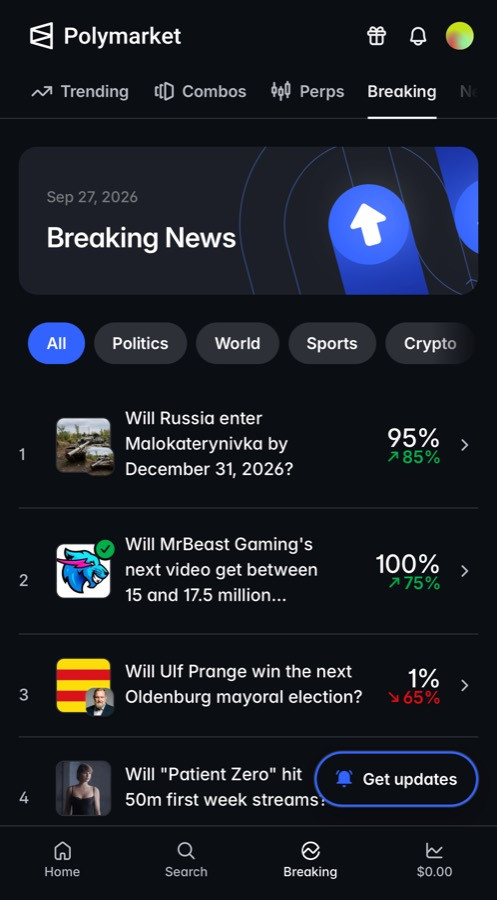
What Polymarket looks like: real screenshots
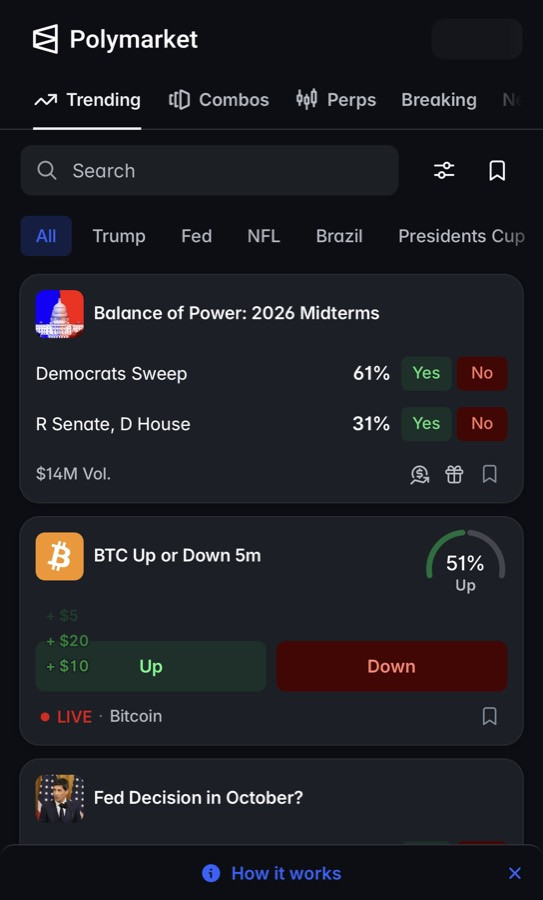
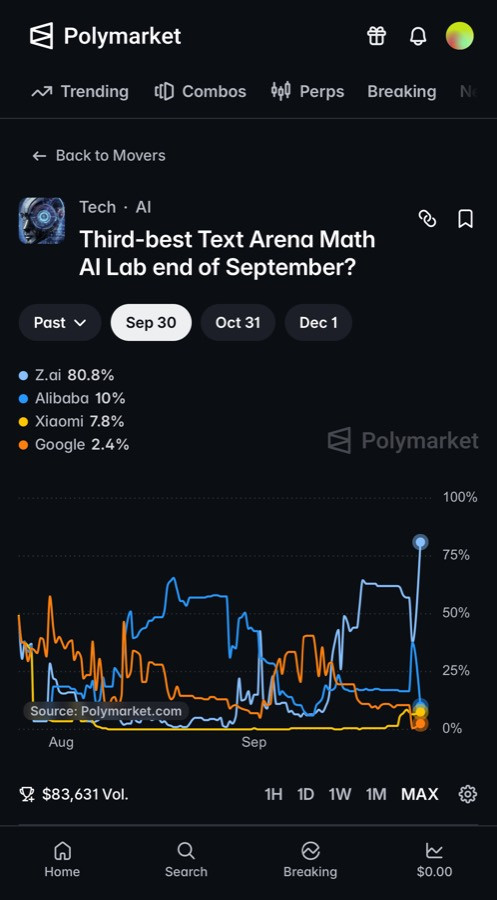
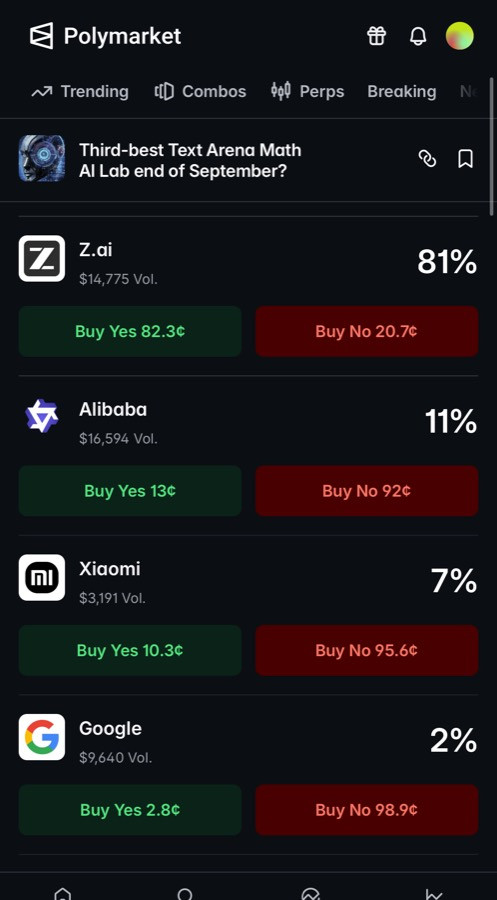
Screenshots taken by our editor on 27 September 2026. Prices and markets change constantly.
Sources & further reading
Related reading
Is Polymarket legit and safe? A 2026 reality checkYes. Polymarket is a global prediction market, and US traders use its CFTC-regulated US exchange. Here's how …Read → Polymarket fees (2026): what the US app really costsPolymarket fees for US traders: how the Polymarket US app shows trading fees, why there are no crypto on-ramp or gas …Read → How to use Polymarket: a step-by-step beginner's guideHow to set up the Polymarket US app, claim the $25 bonus with code COLLEGEPM, place your first YES/NO trade in ce…Read → Kalshi vs Polymarket: which should you use? (2026)A direct comparison of Kalshi and Polymarket across legality, fees, market selection, and payout speed. Includes a re…Read →
Deposit $10, Get a $25 Trading Bonus! on Polymarket with code COLLEGEPM
Trade on Polymarket → (opens in a new tab)18+ Only. Restrictions and eligibility requirements apply. Not available in all jurisdictions. Trading is risky. 100% loss can occur. See polymarket.com/tos for more information. The Polymarket US App serves as an independent software provider and affiliate of Polymarket US and Polymarket Clearing, the CFTC-regulated exchange and clearing organization.
21+. Gambling problem? Call 1-800-GAMBLER.
Trade $50, Get $75! on ProphetX with code COLLEGEPM
Trade on ProphetX → (opens in a new tab)18+ only. New traders only. Offer terms are set by ProphetX and may change. Event contract trading involves risk, including loss of the funds you commit. ProphetX is a CFTC-regulated designated contract market and derivatives clearing organization. Not available in all states.
21+. Gambling problem? Call 1-800-GAMBLER.
Trade $25 and Get $25! on Kalshi with code COLLEGEPM
Trade on Kalshi → (opens in a new tab)Certain limitations apply. The offer is available to new users only, subject to the terms and conditions at kalshi.com/tc/500. 18+ only. Restrictions and eligibility requirements apply. Event contract trading involves significant risk and is not appropriate for everyone. Please carefully consider if it is appropriate for you in light of your personal financial circumstances. Kalshi products are not available in all jurisdictions. See kalshi.com/regulatory for more information.
21+. Gambling problem? Call 1-800-GAMBLER.
100% purchase match up to $100! on Rebet (mobile) with code COLLEGEPM
Get Rebet → (opens in a new tab)21+. Gambling problem? Call 1-800-GAMBLER.
Frequently asked questions
Is Polymarket safe?
In the US, Polymarket runs through Polymarket US and Polymarket Clearing, a CFTC-regulated exchange and clearing organization it gained through its 2025 acquisition of QCX. You fund and trade in dollars after full identity verification. The real risk is market risk: you can lose what you stake.
Can US residents use Polymarket?
Available to eligible residents through the Polymarket US app (as of October 3, 2026); check current state rules. It covers 49 states plus Washington, D.C. Nevada is not included. Polymarket requires users to be 18+; our editorial policy is 21+.
What are Polymarket's fees?
The Polymarket US app shows its trading fees before you confirm an order; check Polymarket's current fee schedule in the app. You fund in dollars, so there are no crypto on-ramp or network costs for US users.
How does Polymarket compare to Kalshi?
Both are CFTC-regulated in the US. Polymarket has the wider market catalog and a welcome offer for a small deposit (deposit $10, get $25). Kalshi runs on web, iOS and Android and charges roughly 1–7% per trade depending on price.
What does the price actually mean?
A contract settles at $1 if the event happens and $0 if it doesn't, so the price is the market's probability. A contract at 23¢ means roughly a 23% chance, and $1 buys about 4.3 shares.
How much money do I need to start?
You can place a real trade with $10–$20. Contracts are priced in cents, so a $20 balance buys dozens of shares on a cheap market. Start small until you have seen a position settle.
21+ · T&Cs apply · Terms
18+ Only. Restrictions and eligibility requirements apply. Not available in all jurisdictions. Trading is risky. 100% loss can occur. See polymarket.com/tos for more information. The Polymarket US App serves as an independent software provider and affiliate of Polymarket US and Polymarket Clearing, the CFTC-regulated exchange and clearing organization.


